Choose a boundary you can finish
Start with one shelf, the space beside the door or the drawer that catches you every morning. Avoid beginning with everything you own. A small boundary lets you stop safely without leaving your home harder to use. If moving items is physically demanding, work seated where possible, ask for suitable help or choose a task that requires no lifting.
Name the purpose of the area before sorting. An entrance might need to hold current shoes, a mobility aid and a bag. A kitchen shelf might need to make everyday food visible. The purpose guides what belongs there, while leaving room for shared needs. A tidy-looking arrangement is not useful if it blocks a route or makes essentials difficult to reach.
Sort by use, not by appearance
Consider four simple destinations: used here now, used elsewhere, stored for later and ready to leave. You do not need four purchased containers. Use clear spaces or existing bags, and keep trip hazards out of walkways. Deal with a small number of items at a time so each can reach its destination before you stop.
Do not discard another person’s possessions without permission. Sentimental items may need a different day and a different pace. If the current task is finding your raincoat, sorting old letters is probably a detour. Place them safely aside rather than forcing a decision because you have started organizing.
Bring the current season forward
Choose the items you actually need for local weather and your daily activities.
Store only clean, dry items
Follow care instructions and check for damage before putting suitable items away.
Label for the next ordinary day
Use plain words you will recognize quickly. A handwritten label is enough.
Make returning things easier
Watch the route an item already takes. If shoes repeatedly stop beside a chair, a suitable storage spot nearby may work better than a cupboard across the house. The aim is not to reward mess; it is to remove unnecessary steps. Agree on shared placements so the easier route works for everyone using the space.
Open storage can reduce effort but increase visible clutter. Closed storage can feel calmer but require extra handling. Neither is universally best. Try a small arrangement using what you have, then notice whether people can find and return things. Labels, tactile cues or a consistent position may help more than a new organizer.
Let the room breathe without redecorating
Clear a small useful surface before adding anything decorative. Keep a favorite object if it makes the space feel familiar. Move an existing lamp to improve a reading spot, provided cables remain safe and the fixture is used as intended. Repositioning a chair may change how a room feels without requiring a new purchase.
Natural décor does not have to mean dried flowers, untreated wood or a collection of plants. Existing cotton curtains, a repaired wooden stool or a stoneware mug can already bring texture to a room. “Natural” is not a safety guarantee: check splinters, stability, allergens and maintenance needs just as you would with other materials.
If you enjoy plants, choose species and locations suitable for the people and animals in the home. The ASPCA plant database offers pet-toxicity information, while the Royal Horticultural Society provides plant-care guidance. A plant is optional, not an air-quality solution or an obligation to create calm.
Work with the conditions outside
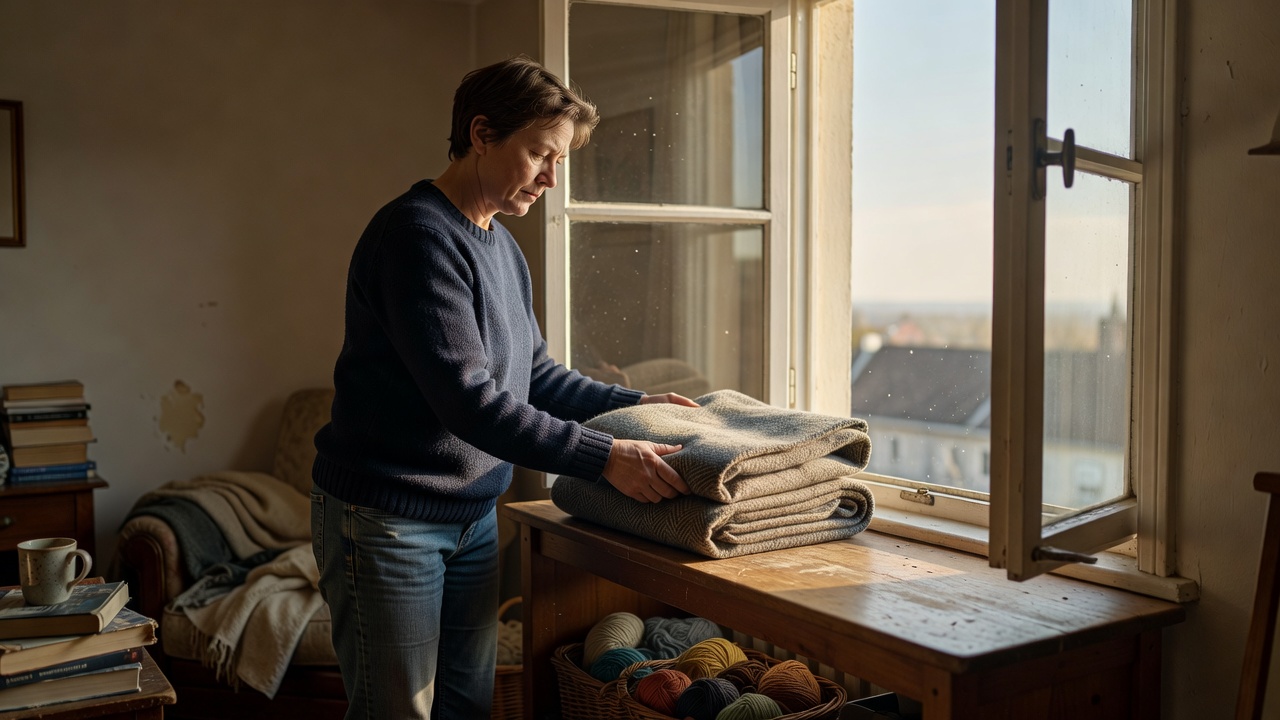
Opening a window may be pleasant when weather, outdoor air quality and safety allow. It may be unsuitable during smoke, high pollen, extreme temperatures or security concerns. Follow local public-health advice and consider the needs of everyone in the home. Fragrance and candles can also be uncomfortable or unsafe for some households; an unscented room is entirely complete.
Keep vents, heaters, exits and necessary access routes clear. Store heavy objects in suitable stable positions rather than lifting them overhead for a cleaner-looking shelf. Where furniture needs anchoring, follow the manufacturer’s instructions and account for rental restrictions with appropriate advice. A room should function safely before it looks composed.
Leave a stopping point
Finish by returning displaced items, clearing the walkway and noting one unresolved task. That task can wait. Review the arrangement after some ordinary use: are the right things easier to find? If yes, keep it. If not, move one element. Seasonal organization is ongoing adjustment, not a photograph you have to preserve.
One shelf is a complete project
Choose one current-use item, one safe home for it and one easy way to return it. Stop when that works.
Make the reset repeatable